How Deep are Buried Utilities?
NOT TO ERR THROUGH IGNORANCE. The depth of buried utilities can vary from a few inches below the surface to more than 10 feet. Find out how deep the buried utilities are in this Content
How deep are buried utilities? The answer depends on the type of utility, local regulations, installation practices, and site conditions. Gas, water, electric, sewer, and communication lines can all be buried at different depths. Before starting any excavation project, it is important to understand that utility depth can vary significantly, making professional utility locating an essential safety step. Even everyday tools, such as shovels, can cause serious damage if lines are not properly located before digging. Therefore, make sure you or the contractor you hire looks at all possibilities. To avoid damaging buried utilities, always verify underground infrastructure before digging. Professional utility locating can help identify utility depth and location before excavation begins. We help you accurately locate the depth of the services.
- How Deep are Buried Utilities?
- 1. Why Utility Depth Matters Before Digging
- 2. Typical Depths of Buried Utilities According to Industry Standards
- 3. What Can Affect Utility Depth?
- 4. What is the Color coding of Buried Utilities?
- 5. The Marking Tolerance Zone for Buried Utilities
- 6. When Should You Hire a Private Utility Locator?
- 7. Why Call a Buried Utilities Locator?
- 8. Can 811 Tell You the Depth of Underground Utilities?
- 9. Conclusion
- 10. Need to Verify Utility Depth Before Digging?
1. Why Utility Depth Matters Before Digging
Many property owners and contractors assume underground utilities are installed at standard depths. In reality, utility depth can vary due to previous construction activities, erosion, grading changes, repairs, or poor installation practices.
Even when utility lines were originally installed according to code, actual field conditions may differ years later. This is why depth estimates should never replace professional utility locating.
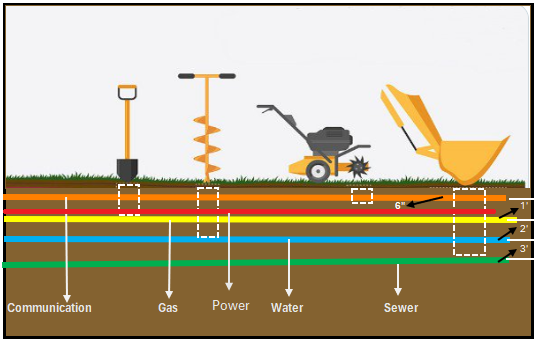
2. Typical Depths of Buried Utilities According to Industry Standards
Each state has its own set standard to which buried utilities must be installed, and these vary, as noted below:
| Utility Type | Typical Depth |
|---|---|
| Communication Lines | 12 inches or less |
| Electric Lines | 24–36 inches |
| Water Lines | 24–48 inches |
| Sewer Lines | 24–72 inches |
| Gas Lines | 24–48 inches |
Because utility depth varies by utility type, many property owners and contractors need additional information about specific underground services before excavation.
If you are investigating electrical infrastructure, read our guide on How to Find Power Lines.
If you need to locate private water services, see Water Line Underground.
If your project involves natural gas infrastructure, review How to Find Gas Lines.
3. What Can Affect Utility Depth?
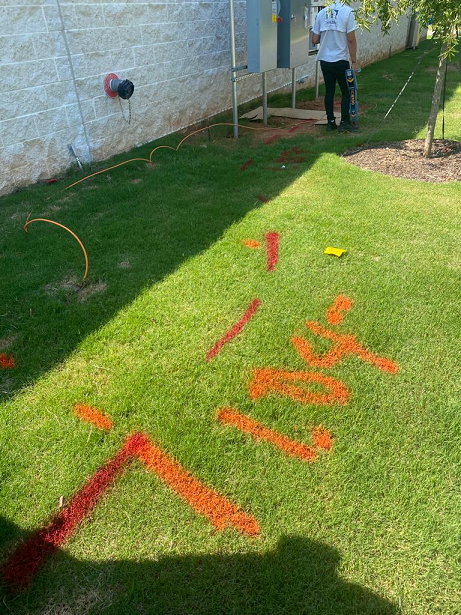
Several factors can affect how deep underground utilities are buried:
- State and local regulations
- Residential vs commercial installations
- Soil conditions
- Previous grading activities
- Road construction
- Utility repairs
- Erosion and settlement
For this reason, utility depth should never be assumed without proper investigation.
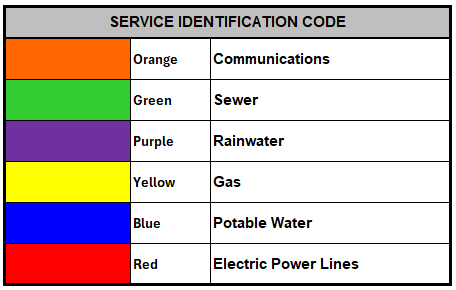
4. What is the Color coding of Buried Utilities?
Utility marking colors in the U.S. are coded according to the American Public Works Association (APWA) Uniform Color Code. They are as follows
5. The Marking Tolerance Zone for Buried Utilities
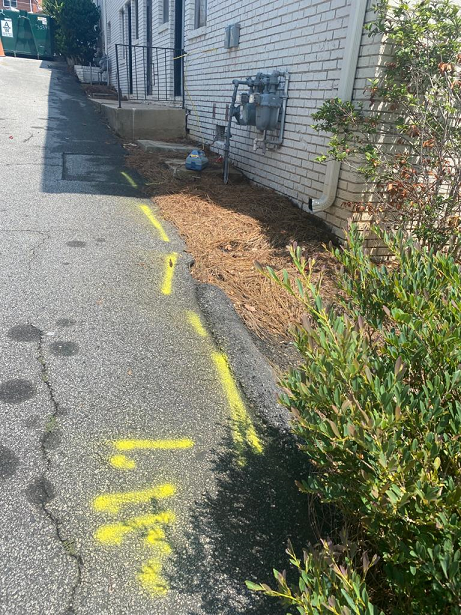
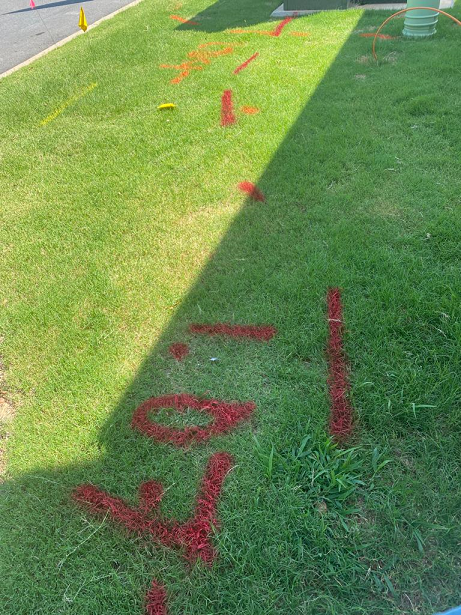
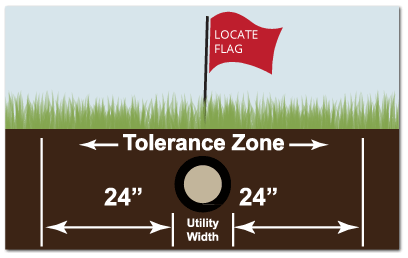
The tolerance zone is a buffer on either side of a marked utility line. This zone is a warning to excavators to proceed with caution and protect underground utilities. If you must dig within this tolerance zone, use extreme caution and do so with a hand shovel. Remember that above ground markings are an approximation of where the utility may be. When marking utilities there is no way to know the exact depth of that buried facility. Over time, some lines may move closer to the surface due to erosion. Therefore, even if hand tools are used, extreme caution should be exercised when working in the tolerance zone
Many utility strikes occur because excavators assume the marked line represents the exact location of the utility. In reality, utility markings indicate an approximate position. The actual utility may be located within the tolerance zone and at a different depth than expected.
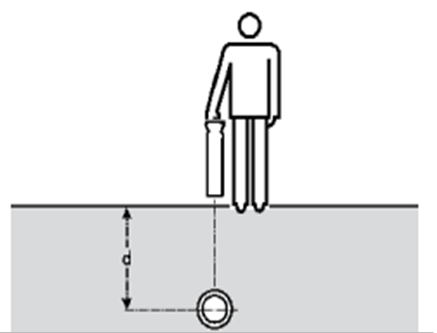
Depth measurement is made to the center of the pipe or cable.
6. When Should You Hire a Private Utility Locator?
Whenever you are going to perform any type of excavation within your property, or on a project as a builder, it is imperative to locate buried utilities prior to beginning excavation.
- Building a garden pond
- Planting a tree
- Digging yard to install a sewer trench.
- Digging post holes for a fence
- Digging foundations
- Installing irrigation systems
- Installing decks, fences, or retaining walls
Before starting any excavation project, many contractors choose to work with a professional private utility locating company to verify underground infrastructure.
7. Why Call a Buried Utilities Locator?
You should call a buried utilities locator before any digging project to ensure worker safety and avoid damage to underground infrastructure. Excavating in the ground without first locating utility lines can result in:
- Injury: Workers can be injured or killed if they hit buried utilities.
- Damage: Utilities and equipment can be damaged.
- Costly Repairs: Utilities can be shut off, which can result in costly repairs.
- Work stoppage: Damage to a utility causes work to stop, resulting in lost time and unexpected expenses.
A licensed utility locator uses technology such as ground penetrating radar (GPR) and electromagnetic induction (EMI) to create a subway utility map: Contact us at (844) 756-2286 to speak with our Utility Coordinator.
8. Can 811 Tell You the Depth of Underground Utilities?
In most cases, 811 utility markings do not provide the actual depth of underground utilities. Public utility locators typically identify the approximate horizontal location of buried facilities. Learn more about What 811 Covers—and What It Doesn’t Before You Dig.
If your project requires utility depth information or verification of private utility lines, you may need a professional private utility locating service using technologies such as Ground Penetrating Radar (GPR) and Electromagnetic Induction (EMI).
9. Conclusion
There is no universal depth for buried utilities. Utility depth varies by utility type, state requirements, site conditions, and construction history. Because underground utilities can shift over time and installation records are not always accurate, the safest approach is to verify both utility location and depth before any excavation begins.
Professional utility locating helps reduce risk, prevent utility strikes, and improve project safety.
For this reason, it is very important to verify where and exactly how deep utilities are located before digging.
10. Need to Verify Utility Depth Before Digging?
Projects R&F USA provides professional Private Utility Locating services using Ground Penetrating Radar (GPR) and Electromagnetic Induction (EMI) technologies.
Whether you are installing fences, utilities, irrigation systems, foundations, or performing commercial construction work, we can help identify underground utilities before excavation begins.
Not sure whether your project requires 811 markings or a private utility locator? Read our complete guide on Private Utility Locating before starting your excavation.
Call (844) 756-2286 to speak with a Utility Coordinator.