Introduction
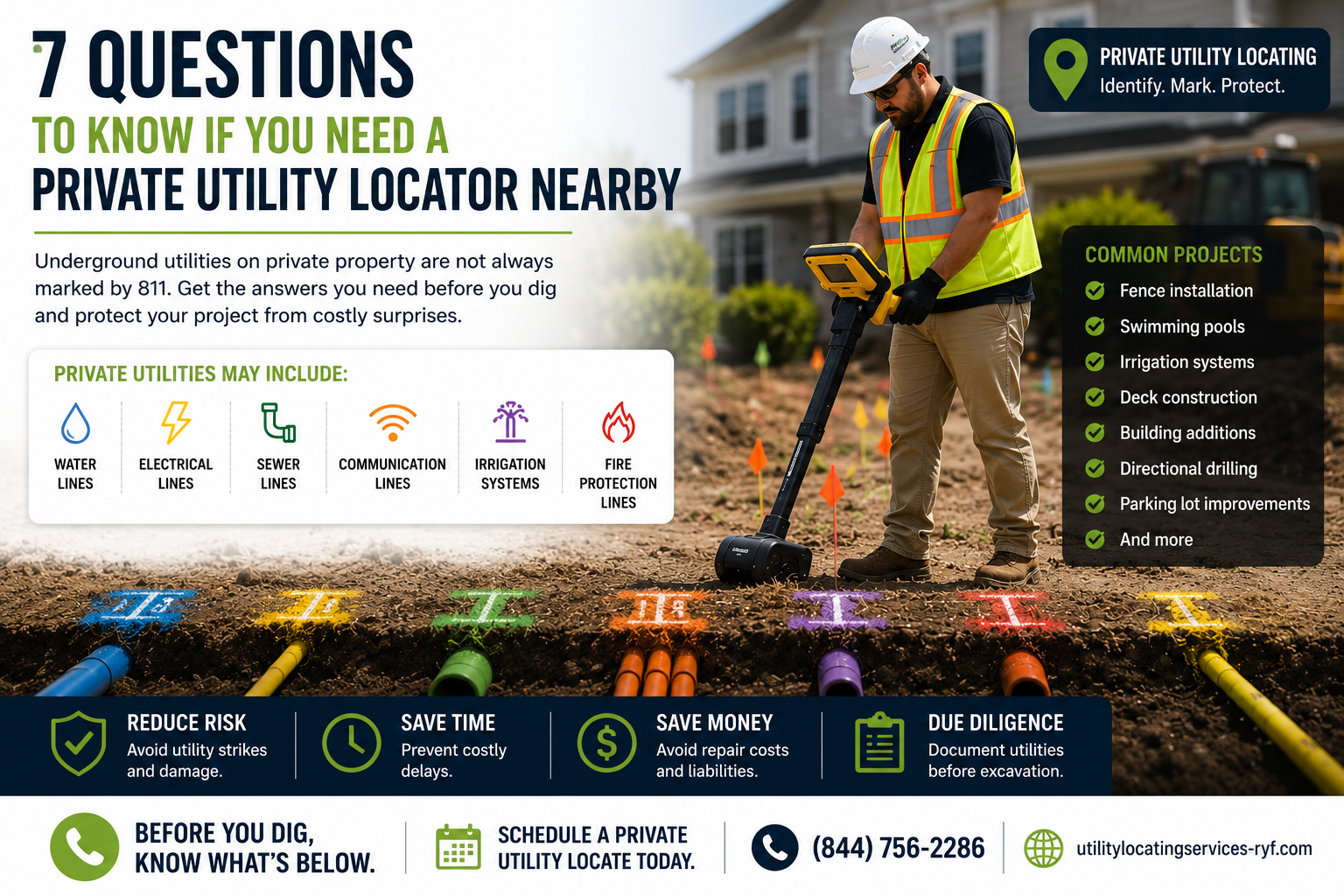
Before starting any excavation project, it is important to know what underground utilities may be present in the work area. Many property owners and contractors assume that calling 811 identifies everything underground, but many privately owned utilities may not be included in standard utility markings.
Private Utility Locators help identify buried infrastructure such as private water lines, sewer lines, irrigation systems, electrical services, communication cables, and other underground utilities located on private property.
The following seven questions will help you determine whether your project may require private utility locating services before excavation begins.
A professional Private Utility Locator nearby can help identify underground utilities before excavation begins.
Why This Question Matters
Every year, contractors and property owners accidentally damage underground utilities because they assumed the work area was clear. In many cases, the damaged utility was privately owned and was not identified through standard public utility markings.
A single utility strike can result in costly repairs, project delays, service interruptions, and unexpected liabilities. Understanding whether your project requires private utility locating before excavation can help reduce risk and improve planning.
The following questions are designed to help determine whether underground utilities may represent a concern for your upcoming project.
1.- Are You Planning Any Excavation on Private Property?
If your project involves digging, drilling, trenching, boring, grading, or excavation of any kind, underground utilities may be present.
Common projects include:
- Fence installation
- Swimming pools
- Deck construction
- Irrigation systems
- Tree planting
- Utility trenching
- Building additions
- Retaining walls
- Directional drilling
- Parking lot improvements
Many underground utilities are invisible from the surface and may not appear on available plans. Damaging a buried utility can result in service interruptions, project delays, repair costs, and safety hazards.
If excavation is planned, locating underground utilities before work begins is strongly recommended.
If any excavation activity is planned, identifying underground utilities before work begins is one of the most effective ways to reduce project risk.
2.- Is Private Utility Locating Free?
No.
Private utility locating is a professional service performed by specialized companies using advanced locating equipment and trained personnel.
Unlike 811 services, which coordinate public utility markings at no direct cost to the requester, private utility locating services involve a fee because the utilities being located are privately owned.
However, the cost of locating utilities is often significantly lower than the cost of repairing a damaged underground line.
A single utility strike may result in:
- Emergency repair costs
- Project delays
- Additional labor expenses
- Equipment downtime
- Property damage
- Liability claims
- Service interruptions
Many contractors consider utility locating an investment in risk reduction rather than an expense.
3.- What Services Do Private Utility Locators Provide?
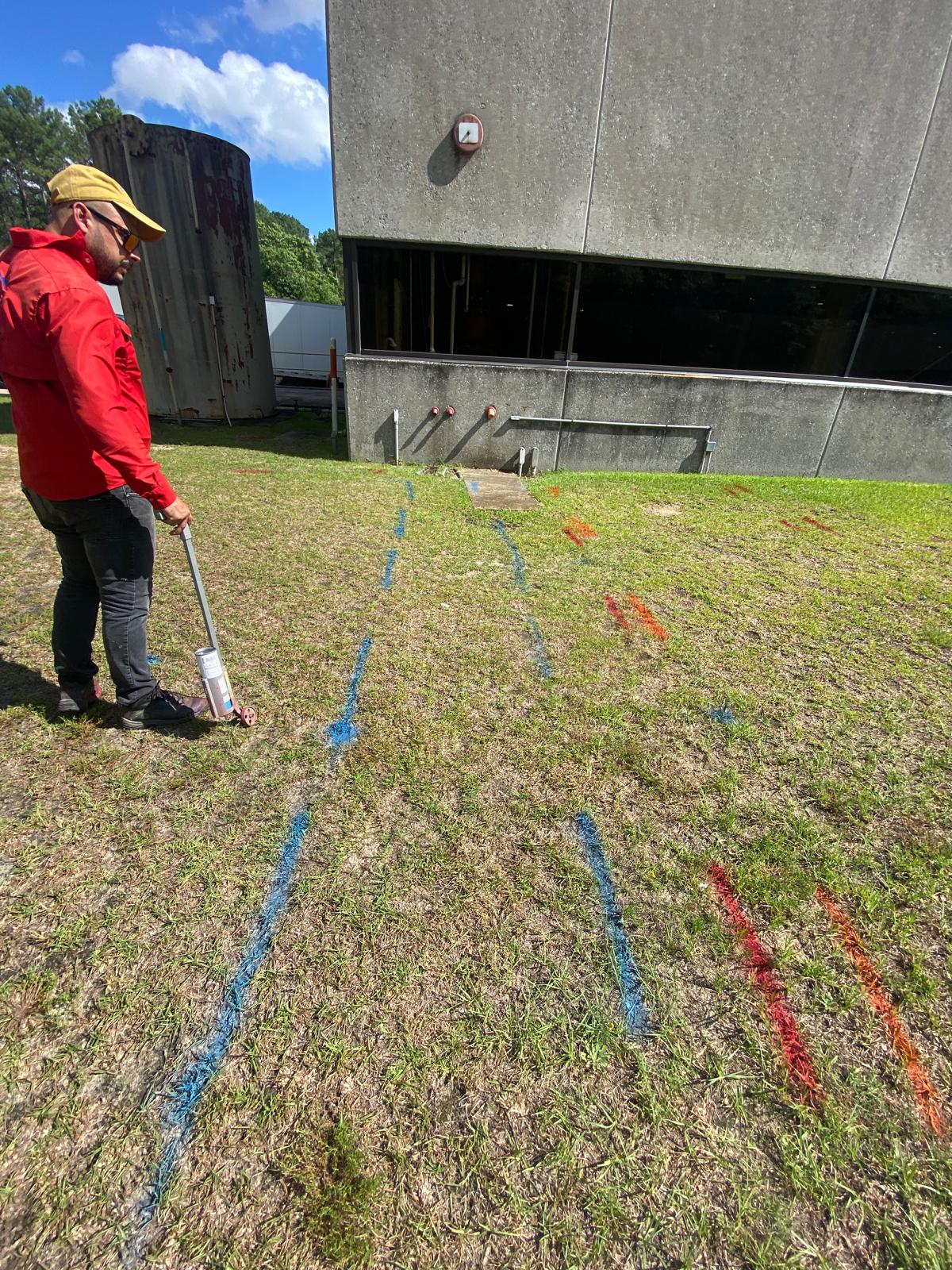
Private Utility Locators identify and mark underground infrastructure that may not be included in standard public utility markings.
Many private utility locating companies can also provide utility depth estimation, helping contractors better understand potential utility conflicts before excavation, trenching, directional drilling, or construction activities.
Common utilities located include:
- Private water lines
- Sewer lines
- Electrical services
- Communication cables
- Fiber optic lines
- Irrigation systems
- Site lighting circuits
- Fire protection lines
- Secondary power feeds
- Utilities serving detached buildings
In addition to marking utilities, many locating companies also provide:
- Utility depth estimation
- Photographic documentation
- Site sketches
- Utility reports
- Utility infrastructure mapping
- CAD and GIS deliverables (when required)
These deliverables help contractors make informed decisions before excavation begins.
4.- How Quickly Can a Private Utility Locator Respond?
Response times vary depending on project size, location, workload, and urgency.
Many projects can be scheduled within one business day, while emergency requests may be accommodated even sooner depending on availability.
Early planning is strongly recommended because utility locating should be completed before excavation crews arrive on site.
Scheduling locating services in advance helps:
- Avoid project delays
- Improve coordination
- Reduce idle labor costs
- Support safer excavation planning
The earlier utility conflicts are identified, the easier they are to manage.
5.- What Utilities Are Considered Private?
One of the most misunderstood aspects of underground utility locating is the distinction between public and private utilities.
In general, private utilities are underground lines located beyond the public utility connection point or meter and are owned by the property owner.
Examples may include:
- Water lines beyond the meter
- Sewer laterals
- Irrigation systems
- Private electrical lines
- Site lighting circuits
- Fire mains
- Communication lines
- Utilities connecting detached buildings
- Septic system components
Typical Utility Coverage
| Utility Type | Public Utility Marking | Private Utility Locator |
|---|---|---|
| Public Gas | Yes | Yes |
| Public Electric | Yes | Yes |
| Public Telecom | Yes | Yes |
| Private Water Lines | No | Yes |
| Irrigation Systems | No | Yes |
| Site Lighting | No | Yes |
| Private Electric Lines | No | Yes |
| Utilities Between Buildings | No | Yes |
| Fire Protection Lines | No | Yes |
Understanding this distinction is critical before excavation begins.
This is one of the most common reasons property owners search for a Private Utility Locator nearby before starting excavation work.
6.- What Is the Difference Between Public and Private Utility Locating?
Public utility locating generally focuses on utility infrastructure owned by participating utility companies.
Private utility locating focuses on utilities located within private property boundaries and owned by the property owner, facility, institution, or business.
Public Utility Locating
Typically includes:
- Public electric
- Public gas
- Public telecommunications
- Public water mains
Private Utility Locating
Typically includes:
- Private water lines
- Irrigation systems
- Site lighting
- Private electric
- Sewer laterals
- Fire protection systems
- Campus utilities
- Industrial facility utilities
Many projects require both public and private utility locating to achieve a more complete understanding of underground conditions.
7.- Can Your Project Afford a Utility Strike?
This may be the most important question of all.
A damaged underground utility can create consequences far beyond the cost of the repair itself.
Potential impacts include:
- Lost productivity
- Project shutdowns
- Utility outages
- Schedule extensions
- Emergency response costs
- Safety incidents
- Customer complaints
- Damage to professional reputation
In many cases, the cost of a professional utility locating service represents only a fraction of the potential costs associated with repairing a damaged underground utility.
The larger the project, the greater the potential impact of an underground utility conflict.
Professional utility locating helps reduce uncertainty before excavation begins.
What These Questions Really Mean for Contractors
If you answered “Yes” to one or more of these questions, your project may involve underground utilities that are not visible from the surface.
Many underground utilities located on private property are not included in standard public utility markings. As a result, contractors who rely solely on visible conditions or incomplete records may unknowingly expose their projects to avoidable risk.
Private utility locating helps contractors:
- Reduce excavation risk
- Improve project planning
- Avoid costly utility strikes
- Minimize delays
- Support safety objectives
- Improve decision-making
- Demonstrate due diligence
Improve bidding accuracy Reduce unforeseen utility conflicts Support safer excavation operations Improve project scheduling
At this stage, the question is no longer whether underground utilities may exist. The question is whether the project can afford the consequences of not knowing where they are.
8.- Conclusion
Before excavation begins, uncertainty is often the greatest risk on a project. Private utility locating helps reduce that uncertainty by identifying underground infrastructure that may not be visible from the surface or included in standard utility markings. Whether you are planning a residential improvement, commercial construction project, utility installation, or directional drilling operation, understanding what lies underground can help prevent costly surprises.
It is of high importance to locate private utilities prior to any excavation to avoid damaging a utility or interrupting service to your property or community. Avoid utility breakage repair costs, contact us, and we will make a scan of the area, where you plan to excavate.
Working with an experienced Private Utility Locator nearby can help reduce excavation risks and improve project planning.
Call us at (844) 756-2286
9.- Recomendations
- Do not excavate without first scanning the area.
- Request a Buried Utility Locator to mark the services.
- Plan at least 3 days in advance of the excavation, so that the private locator can make the marking.
- Require your builder to call a Locator before starting an excavation.
- Inform Locator the Purpose of Excavation.
10.- Bibliography Website
https://www.privateutilitylocating.com/
https://nc811.org/private-lines/
- How Accurate Utility Marking Reduces Risk and Project Delays
- Utility Infrastructure Mapping: Why Every Facility Should Have One
- Are You 100% Sure Your Project Is Safe Before Digging?
- Utility Infrastructure Mapping: How Contractors Prevent Costly Underground Risks Before Construction
- What Is Private Utility Locating and Why General Contractors Need It